

Check out our Getaway Guide online or have us send you one. Have an immediate question? Call us at 1.800.337.5015
Get the Guide
As seen in the 2026 Destination Gettysburg Getaway Guide
This timeline highlights moments in Gettysburg and Adams County history that shaped the broader American story. It focuses on dates with more national significance, events that connect the area to the ideas, conflicts, and turning points relevant to America’s 250th anniversary.
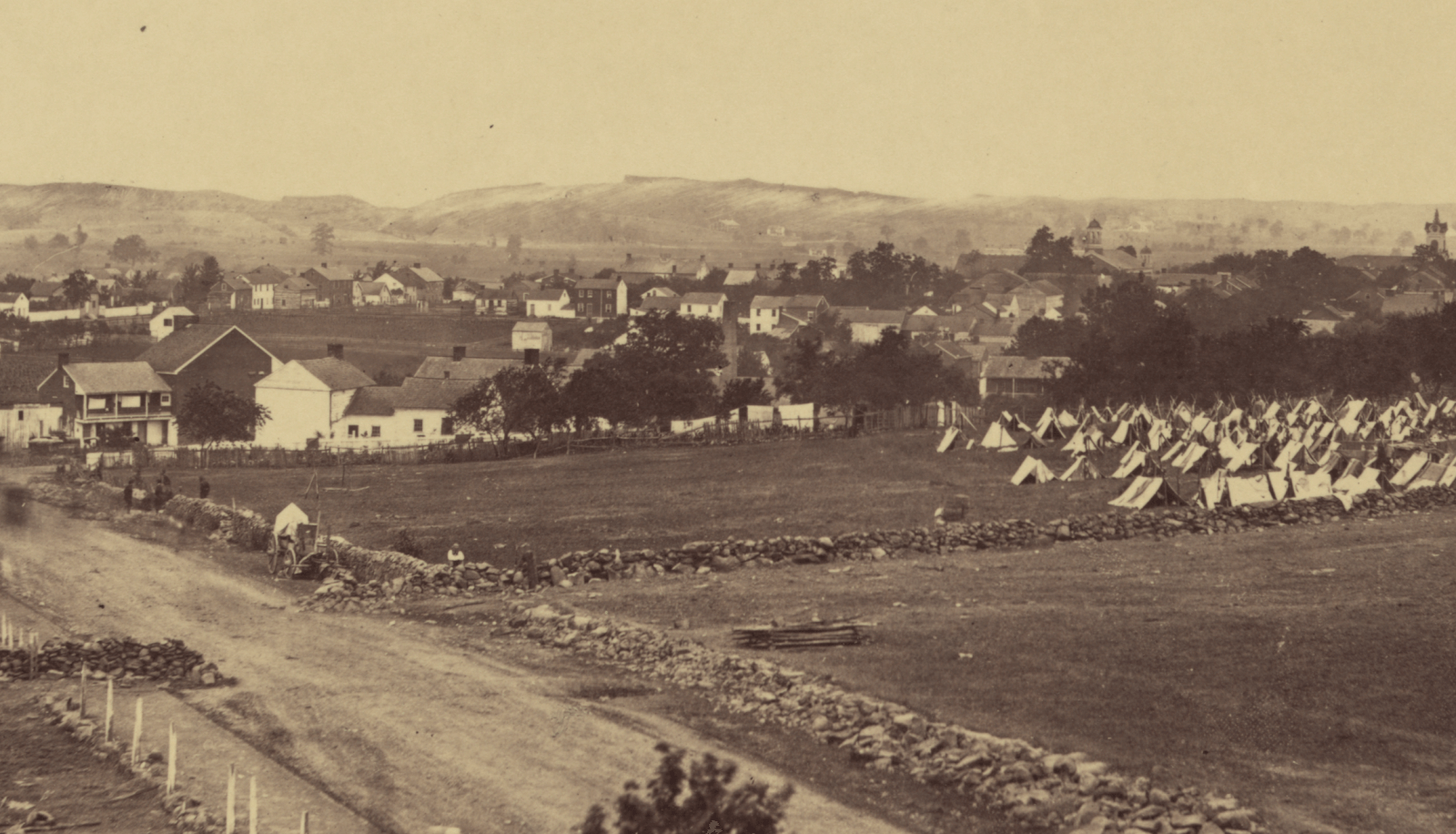
The Woodland Period’s Indigenous peoples establish prehistoric toolmaking and trade across the mid-Atlantic region. In the Adams County area, transient hunter-gatherers include Nanticoke, Susquehannock, Shawnee and Delaware
1681 William Penn receives a charter from King Charles II of England for 45,000 square miles of land in North America and calls it Pennsylvania or “Penns Woods.”
1736 A Treaty is negotiated between the agents of William Penn and Native American from land west of the Susquehanna River paving the way for early European Settlement.
1758 During the French and Indian War, Mary Jemison is captured after her family is killed near present-day Adams County. Adopted by the Seneca, she chooses to remain with them for life.
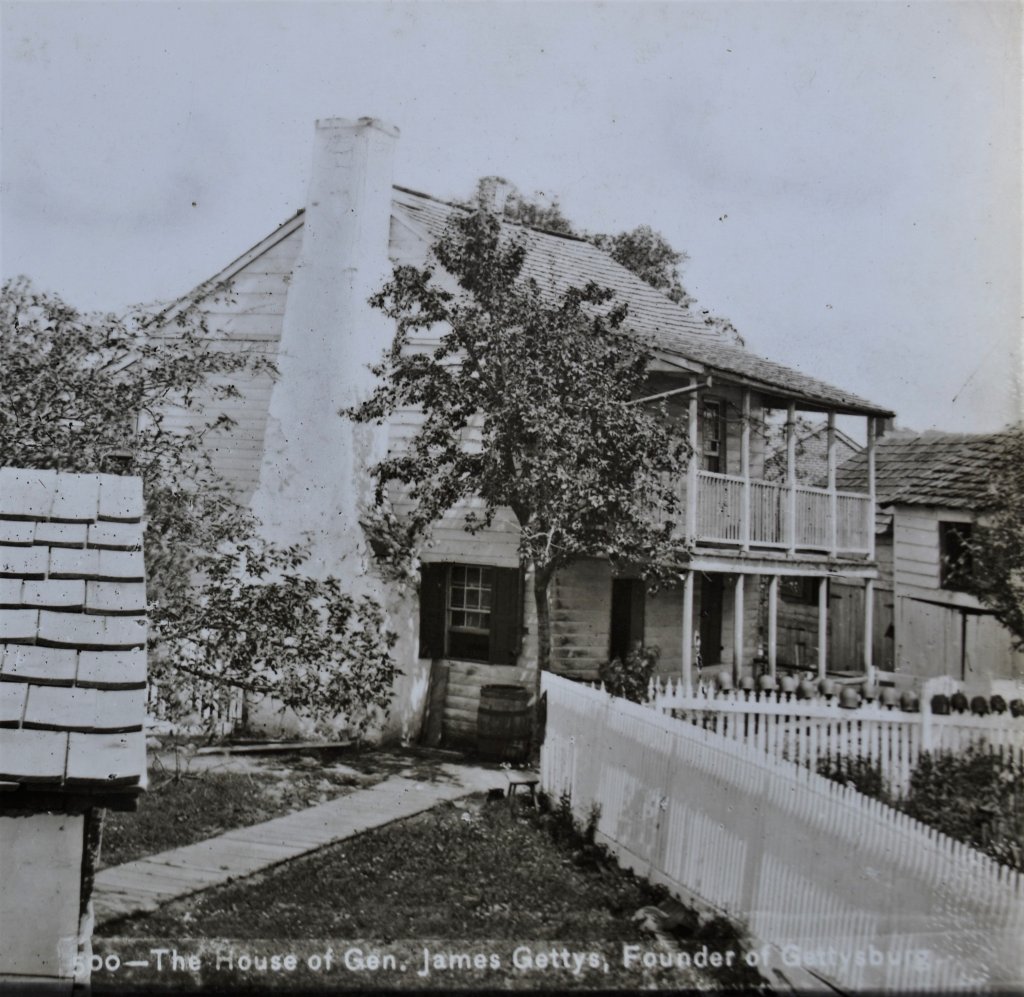
1761 Gettys Tavern is established when a Scots Irish immigrant named Samuel Gettys opens a tavern and trading post along a major throughfare, the Marsh Creek Settlement of York County, Pennsylvania.
1765 Although a temporary demarcation is agreed to in 1739, Charles Mason and Jeremiah Dixon survey a separation between north and south through this area, creating one of America’s most well-known borders. The Mason-Dixon Line became official in 1770.
1775 Marsh Creek Settlers organize a company to join George Washington’s Army near Boston. Throughout the war men from Western York County fought for independence from Great Britain.
1786 The town of Gettysburg is established by James Gettys
1794 President George Washington Sleeps Here
On his journey back from command of troops in Western Pennsylvania during the Whiskey Rebellion, George Washington spends the night of October 24, 1794, at Russell’s Tavern, just north of Gettysburg.
1800 Adams County officially separates from York County, with Gettysburg becoming the county seat. Six years later, Gettysburg is formally incorporated as a borough and the civic and cultural heart of the region.
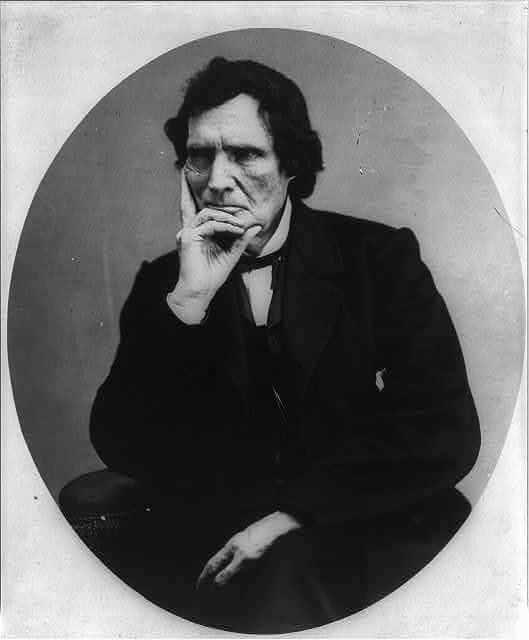
1820s-1830s Lawyer and reformer Thaddeus Stevens practices in Gettysburg, advocating for public education, abolition, and equal rights principles that later define his national leadership.
1836 The first meetings of the Adams County Anti-Slavery Society signal local participation in the national abolitionist movement and the area’s role in the pre-Civil War struggle over freedom and human rights.
1863, July The bloodiest battle in American history is fought on the first three days of July 1863 resulting in over 50,000 casualties. A Union victory turns the tide of the Civil War, halting Lee’s invasion of the North.
1863, November President Abraham Lincoln redefines liberty and unity with 272 immortal words of the Gettysburg Address at the Soldiers’ National Cemetery dedication.
1864 The Gettysburg Battlefield Memorial Association is organized to preserve the Gettysburg battlefield.
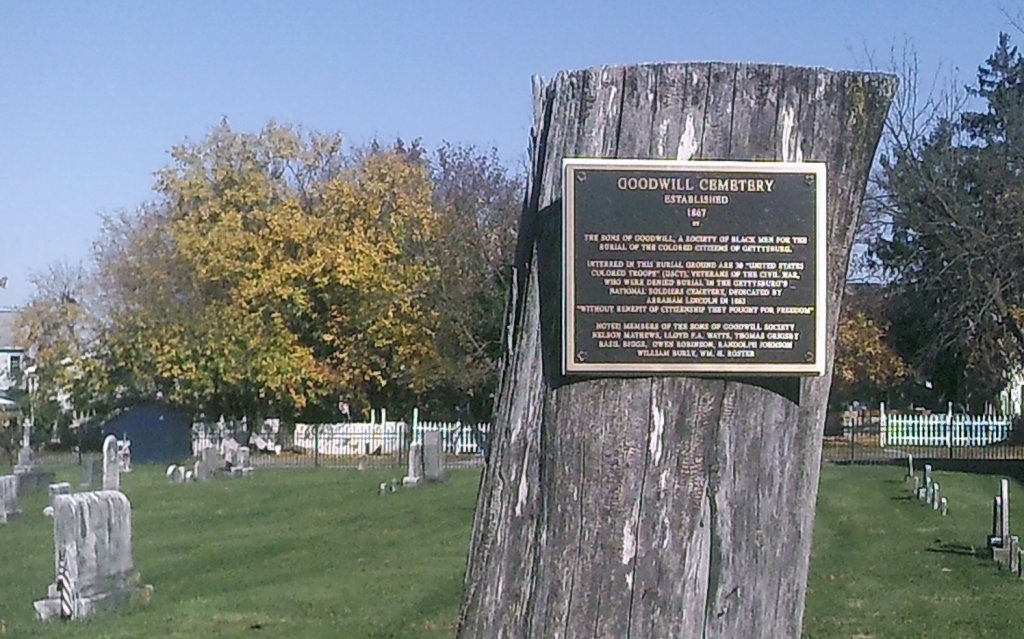
1867 Gettysburg’s Third Ward residents establish Good Will Cemetery, later renamed Lincoln Cemetery, to honor Black Civil War veterans and community members who helped shape the town’s history.
1878 Near Cashtown, Noah Sheely plants one of the first commercial orchards in Adams County, setting the stage for the region’s emergence as a national leader in apple production.
1880s-1890s Gettysburg enjoys heavy visitation as efforts to commemorate and memorialize the battlefield result in the placement of hundreds of monuments in the fields around Gettysburg.
1895 Ownership of the battlefield passes from the Battlefield Memorial Association to the War Department, marking the beginning of federal oversight to preserve and interpret the site for future generations.
1907 Entrepreneur Christian H. Musselman opens his apple-processing plant in Biglerville, pioneering large-scale fruit preservation and fueling Adams County’s agricultural economy.
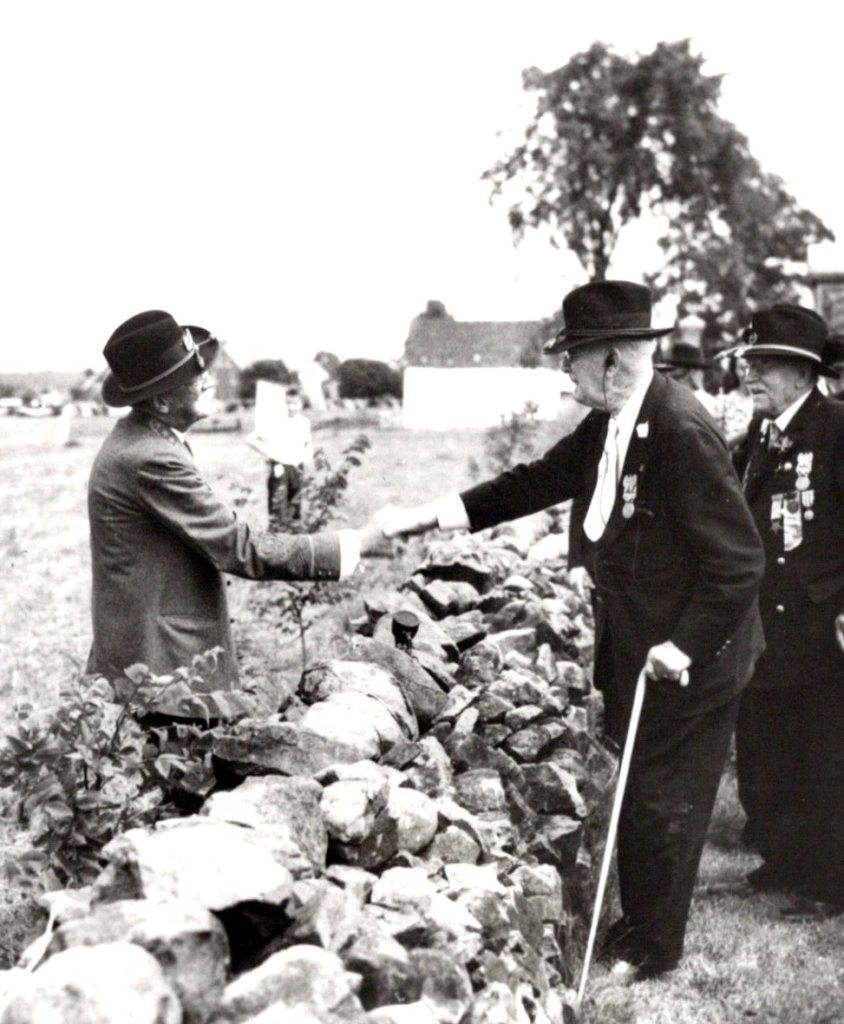
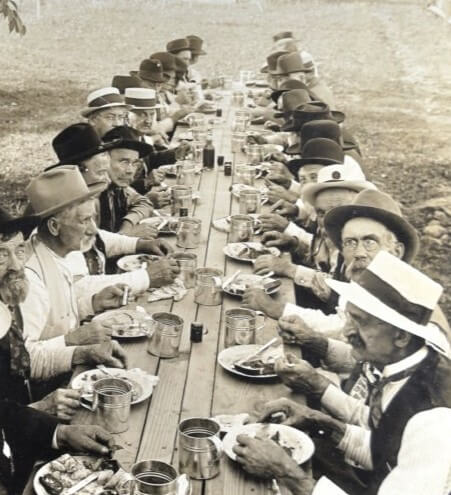
1913 Over 50,000 Union and Confederate veterans gather for “The Great Reunion,” shaking hands across the stone wall at Pickett’s Charge 50 years after they fought there.
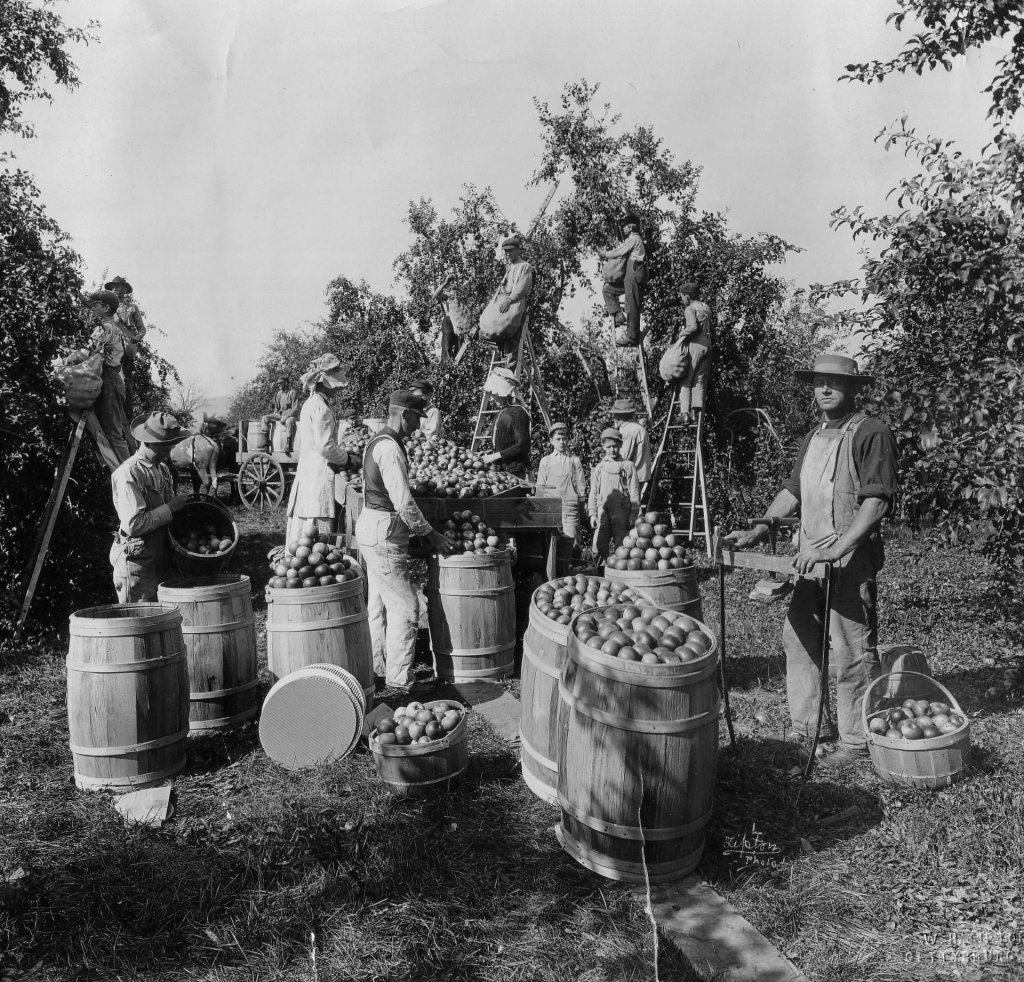
1917 Arthur W. Rice founds his family fruit-packing operation, Rice Fruit Company, in Gardners, cementing Adams County’s agricultural identity
1918 Camp Colt, a training camp for the United States Tank Corps during World War I, is established in Gettysburg with Captain Dwight David Eisenhower in command.
1933 Management of the Gettysburg battlefield shifts to the National Park Service, ensuring its preservation as a symbol of sacrifice, unity, and national memory.
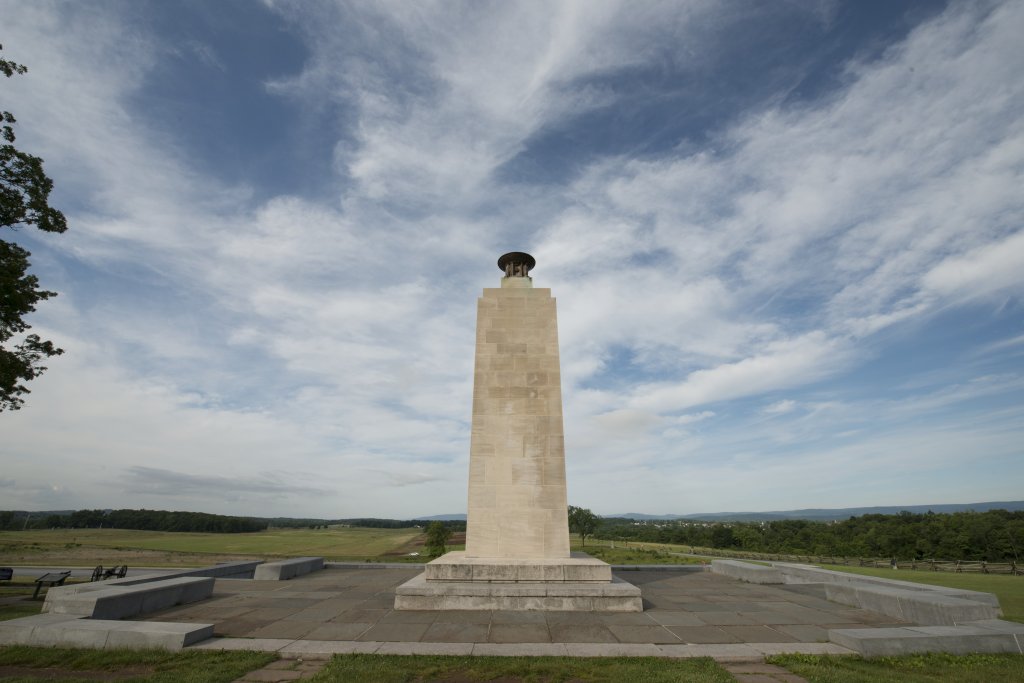
1938 During the last reunion of the blue and gray, nearly 2,000 Civil War veterans visit as President Franklin D. Roosevelt dedicates the Eternal Light Peace Memorial, honoring peace eternal in a nation united, amid the deepening shadows of World War.
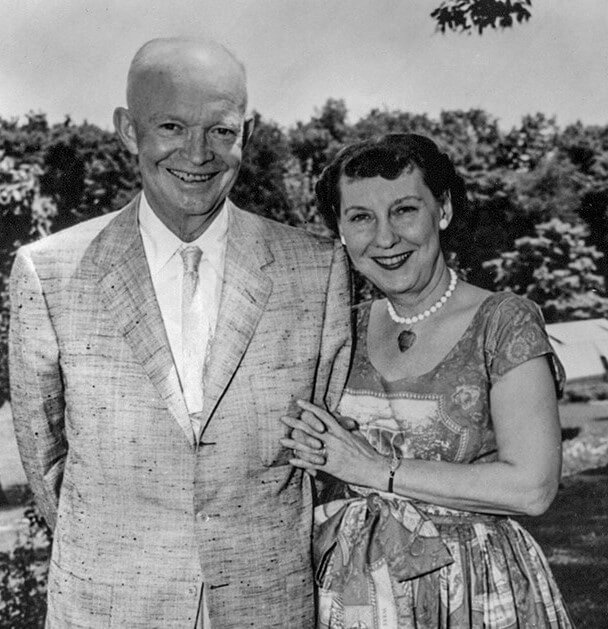
1950 Supreme Allied Commander Dwight David Eisenhower purchases a farm near Gettysburg and becomes our most famous resident.
1955 After suffering a heart attack, President Eisenhower recuperates at his Gettysburg farm, which briefly serves as the temporary White House. He spends much of the 1950s shuttling back and forth to Washington, DC during his presidency.
1961–1979 The farm becomes Ike and Mamie’s permanent retirement residence and a meeting place where Eisenhower welcomes Nikita Khrushchev, Charles de Gaulle, Jawaharlal Nehru, and Bernard Montgomery, using Gettysburg’s calm to foster Cold War diplomacy.
1962 Attempting to modernize how visitors experience Gettysburg National Military Park, the Cyclorama building is opened as the new home of the cyclorama painting of the battlefield.
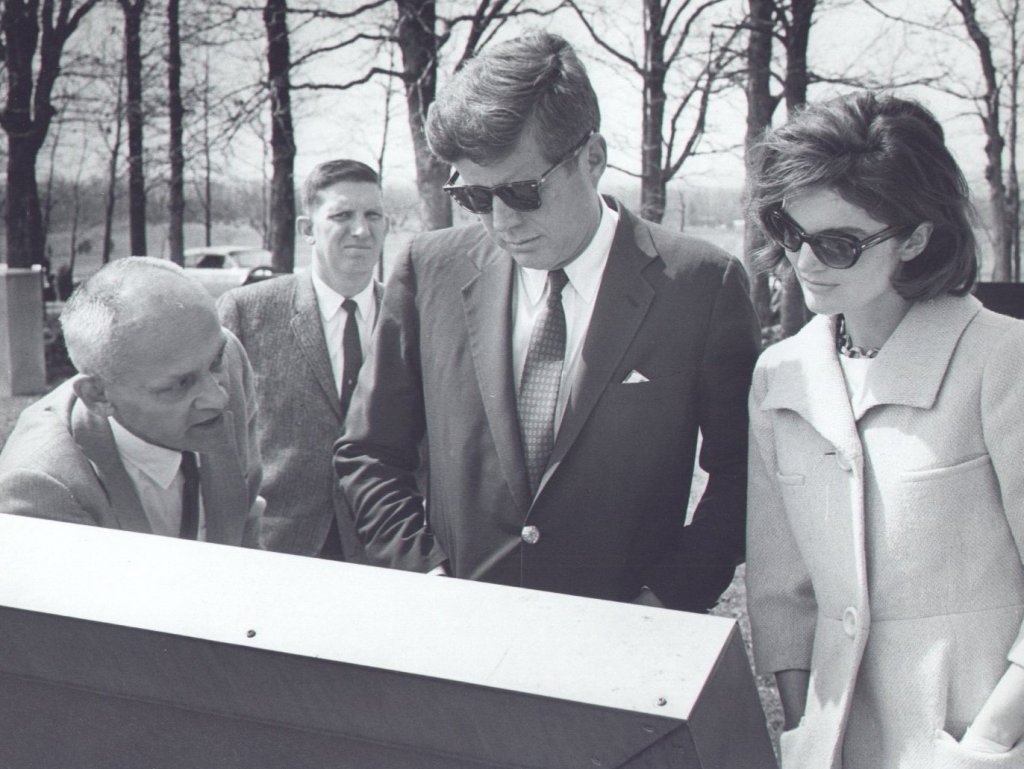
1963, March. President John F. Kennedy and First Lady Jacqueline Kennedy visit the battlefield. Licensed Battlefield Guide, Colonel Jacob Sheads, leads the tour.
1963, November. JFK is invited to the 100th anniversary of the Gettysburg Address but political tensions in Texas force him to decline. Eisenhower delivers the Dedication Day speech in his place. Three days later, Kennedy is assassinated in Dallas.
1978 During Middle East peace talks, President Jimmy Carter brings Egypt’s Anwar Sadat and Israel’s Menachem Begin to Gettysburg. Moved by the battlefield’s solemn history, they return to Camp David and finalize a historic peace agreement.
1981 The Eisenhower farm opens to the public as the Eisenhower National Historic Site, preserving the legacy of leadership and diplomacy rooted in Gettysburg soil.
Early 1990s The PBS television series The Civil War and the film Gettysburg renew public interest in the conflict, bring the battle into popular culture and introduce Gettysburg to a new audience.
2009 The Wills House is restored by the National Park Service as a historic home and museum on the anniversary of President Lincoln’s 200th birthday, recognizing the place where his Gettysburg Address was completed.
2013 The 150th anniversary of the Battle of Gettysburg features a series of programs highlighted by a public march across the field of Pickett’s Charge on July 3.
2026 America’s 250th Anniversary sparks a collaboration between America250PA and Adams County where a number of events solidify Gettysburg’s place among the most historically significant locations in America.
Learn even more about Adams County’s 250 years of history at https://destinationgettysburg.com/america-250th/hometown-history/


Check out our Getaway Guide online or have us send you one. Have an immediate question? Call us at 1.800.337.5015
Get the Guide
Don’t miss a thing that’s going on in Gettysburg; sign up to receive our fun and informative travel planning newsletter.
Let's Go