

Check out our Getaway Guide online or have us send you one. Have an immediate question? Call us at 1.800.337.5015
Get the Guide
By Austin Poulson
Lincoln arrived by train on the evening of November 18, 1863, ahead of the dedication of the new Soldiers’ National Cemetery. The following day, he delivered a speech lasting only about two minutes: the Gettysburg Address. Its 272 words connected the sacrifice at Gettysburg to the nation’s founding ideals of liberty and equality and called for a “new birth of freedom.”
More than 160 years later, visitors can still follow Abraham Lincoln’s footsteps through Gettysburg. From the railroad station where he arrived to the home where he stayed, the cemetery where he spoke and the church he visited before departing, many of the places connected to those historic 24 hours can still be experienced today.
Follow his journey below.
35 Carlisle Street, Gettysburg, PA 17325
Start your Lincoln journey where his visit began.
On the evening of November 18, 1863, President Lincoln arrived by train at the Gettysburg Railroad Station. Crowds gathered to welcome the president as he arrived from Washington D.C., to take part in the following day’s cemetery dedication.
More than 160 years later, the train station is still standing and offers visitors a connection to when Lincoln first stepped foot in Gettysburg.
8 Lincoln Square, Gettysburg, PA 17325
From the railroad station, make your way to Lincoln Square and the David Wills House.
A prominent Gettysburg attorney, David Wills played an important role in establishing the Soldiers’ National Cemetery and organizing its dedication. When Lincoln arrived in Gettysburg, the Wills family welcomed the president into their home for the night.
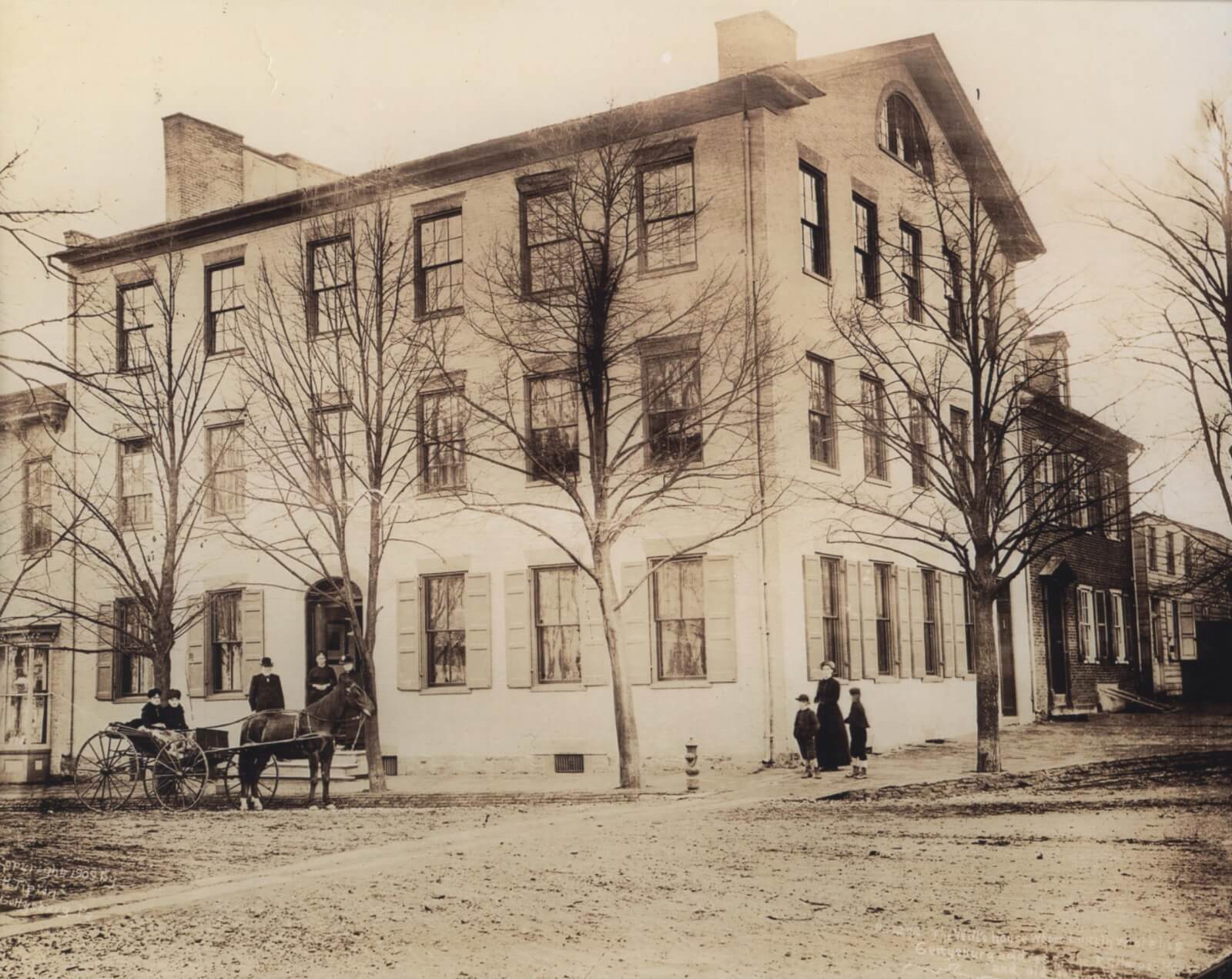
Historic view of the David Wills House on Lincoln Square in Gettysburg, where Abraham Lincoln stayed on November 18, 1863, before delivering the Gettysburg Address. Courtesy of Gettysburg History.
Lincoln began preparing his remarks before leaving Washington. During his night at the Wills House, he continued working on the speech, putting the finishing touches on the Gettysburg Address before delivering it the following day.
The following morning, Lincoln and fellow dignitaries met outside the Wills House before beginning their procession to the cemetery.
Visitor Note: The David Wills House is currently closed and is scheduled to reopen November 16–19, 2026. Visitors can still view the exterior of the historic home on Lincoln Square.
1195 Baltimore Pike, Gettysburg, PA 17325
On the morning of November 19, 1863, Lincoln joined a procession of dignitaries traveling from downtown Gettysburg to the newly established Soldiers’ National Cemetery. Thousands had gathered for its dedication.
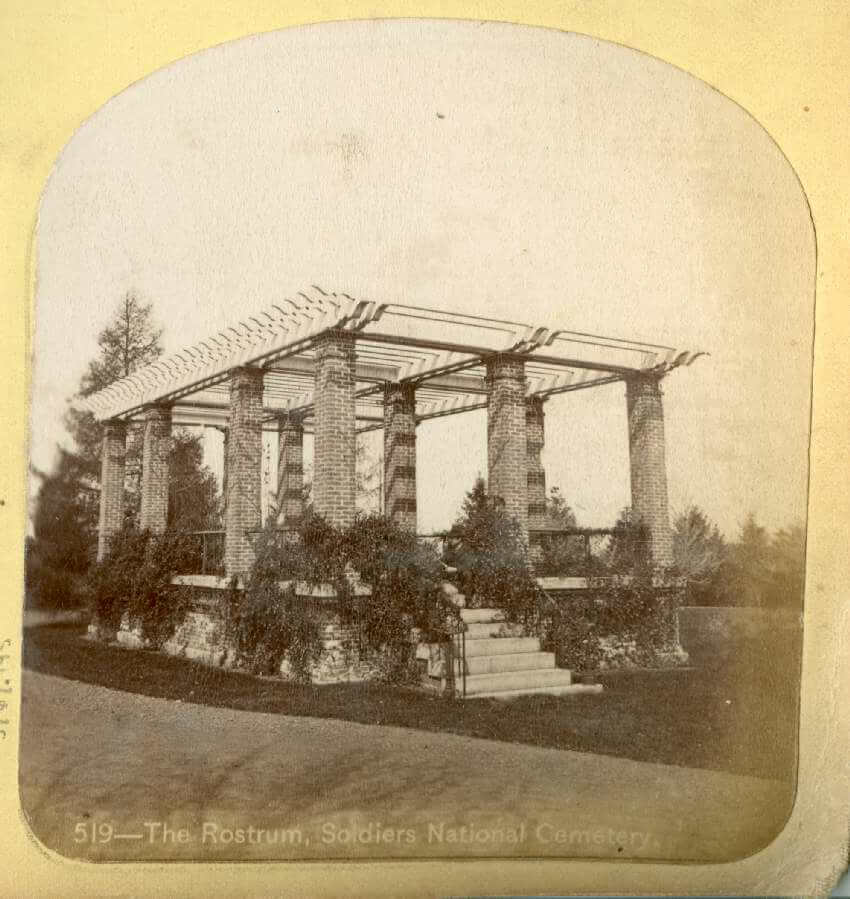
Historic view of the rostrum in Soldiers’ National Cemetery in Gettysburg. Photograph by William H. Tipton. Courtesy of Gettysburg History.
The ceremony’s featured speaker, renowned orator Edward Everett, spoke for approximately two hours. Lincoln followed with what he had been asked to deliver: a few appropriate remarks. His speech lasted only about two minutes.
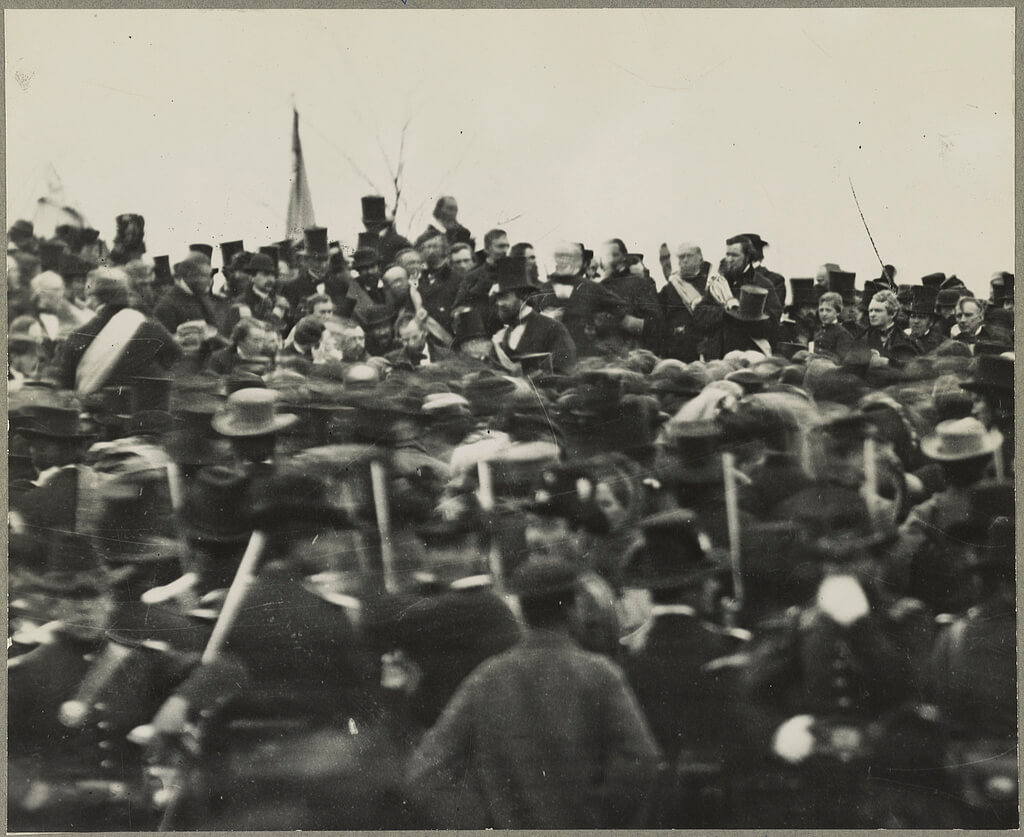
The crowd gathered for the dedication of the Soldiers’ National Cemetery in Gettysburg on November 19, 1863. Abraham Lincoln is visible among the dignitaries; the photograph is believed to have been taken several hours before he delivered the Gettysburg Address. Courtesy of the Library of Congress.
Those 272 words became the Gettysburg Address. Rather than recounting the battle itself, Lincoln connected the sacrifice at Gettysburg to the nation’s founding principles and challenged Americans to ensure that government “of the people, by the people, for the people” would endure.
Today, visitors can walk through Gettysburg National Cemetery and reflect on Lincoln’s words in the landscape that gave them meaning.
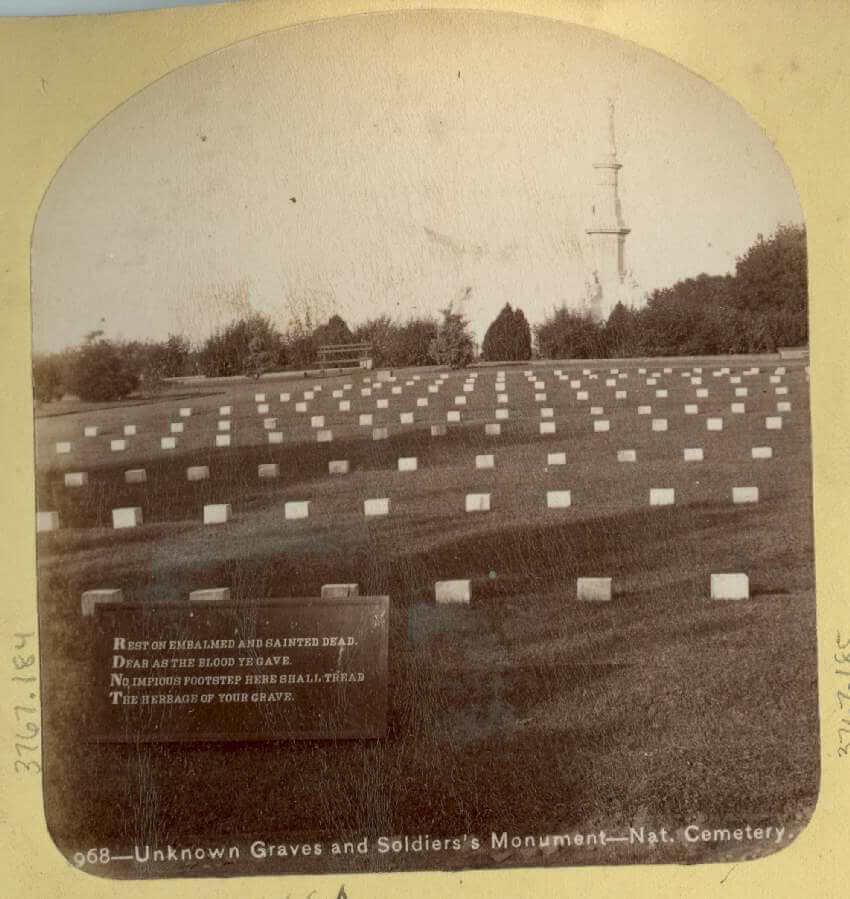
Unknown soldiers’ graves at Soldiers’ National Cemetery, with the Soldiers’ National Monument visible in the distance. Photograph by William H. Tipton. Courtesy of Gettysburg History.
208 Baltimore Street, Gettysburg, PA 17325
Following the dedication of Soldiers’ National Cemetery, Lincoln returned to the David Wills House, where he met Gettysburg resident John Burns. Burns had famously taken up arms and fought alongside Union soldiers during the Battle of Gettysburg.
Lincoln and Burns then walked together down Baltimore Street to Gettysburg Presbyterian Church, where Lincoln attended a patriotic gathering. Although the church Lincoln entered in 1863 was later replaced, the present-day church stands on the same site. Inside the sanctuary, a pew marks approximately where Lincoln sat during his visit.
After the gathering, Lincoln left the church and returned to the Gettysburg Railroad Station. That evening, November 19, 1863, he boarded a train for Washington, bringing his brief but historic visit to Gettysburg to an end.
Visitors can still walk this stretch of Baltimore Street today, tracing part of Lincoln’s final route through Gettysburg before his departure.
More than 160 years after Abraham Lincoln arrived in Gettysburg, visitors can still trace much of his historic journey through town. Begin at the Gettysburg Lincoln Railroad Station, continue to Lincoln Square and the David Wills House, follow Baltimore Street toward Gettysburg National Cemetery, and visit Gettysburg Presbyterian Church before returning downtown.
Along the way, take time to consider how dramatically the meaning of Gettysburg changed during Lincoln’s brief visit. Only months earlier, these streets and fields had witnessed one of the bloodiest battles of the Civil War. By the time Lincoln left Gettysburg on November 19, his words had helped connect that sacrifice to a larger question about liberty, equality and the future of American democracy.
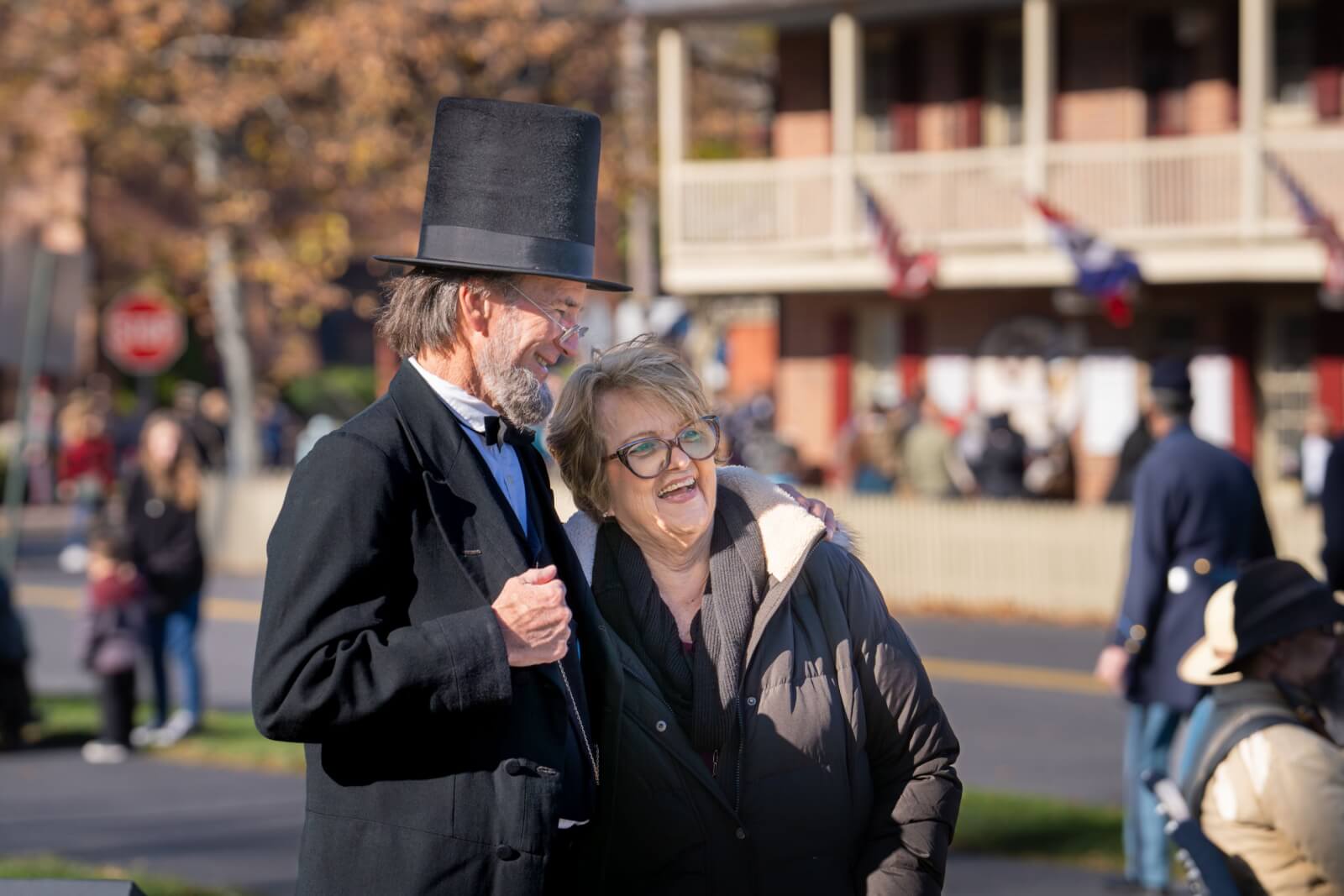
Abraham Lincoln’s connection to Gettysburg continues to draw visitors more than 160 years after his historic visit. Photo by Dave Johnson, Gettysburg Images.


Check out our Getaway Guide online or have us send you one. Have an immediate question? Call us at 1.800.337.5015
Get the Guide
Don’t miss a thing that’s going on in Gettysburg; sign up to receive our fun and informative travel planning newsletter.
Let's Go